2024 Great GO! St. Louis Halloween Race Half Marathon


Year 4 Studio, National University of Singapore, 2013

MIT-THU-SJU Joint Urban Design Studio, Tsinghua University, 2016

R&D Studio, Delft University of Technology, 2017
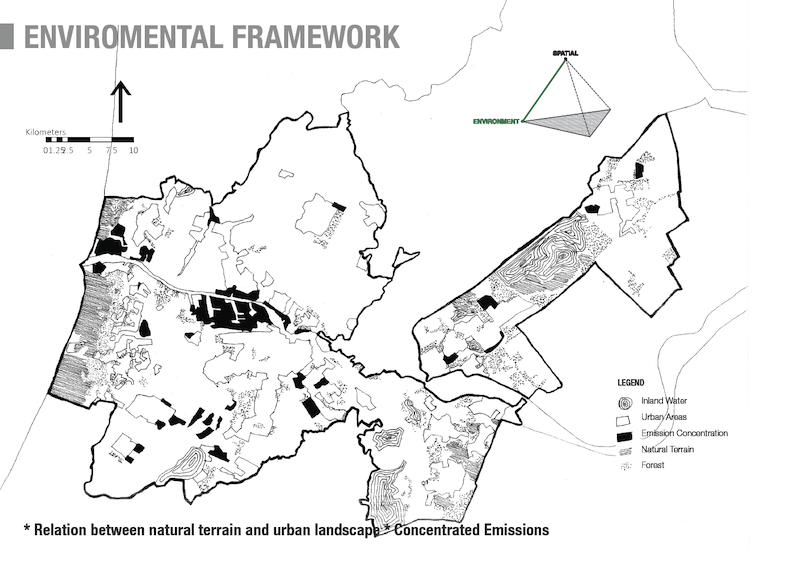
Geo-Design for a Circular Economy, Delft University of Technology, 2017

Published in Housing Policy Debate, 2020
Exclusionary land-use policies implemented by local governments over decades have contributed to the spatial concentration of publicly subsidized housing in central cities and the development and preservation of affluent, racially homogeneous communities elsewhere. Various policy responses have been developed to overcome local regulatory barriers. In this article we examine one of the longest-standing initiatives, the Chapter 40B permit override policy of the State of Massachusetts, and the pattern of subsidized housing development across all municipalities in the state. Between 1997 and 2017, the subsidized housing stock in Massachusetts increased by 58,975 units, rising from 7.8% of the housing stock statewide to 9.2%. Within the Boston metropolitan area, the subsidized stock increased by 37,417 units over this time period, increasing from 9.2% to 10.3% of the metro area’s housing. Cities and towns in Massachusetts made steady progress in subsidized housing production over these years but did so unevenly. Boston metro area cities made the most progress. Multivariate analysis indicates that cities with higher percentage white population produced the least subsidized housing over the study period.
Published in Housing Policy Debate, 2021
Residential segregation by income has become an emerging concern in Chinese cities. Existing literature on residential segregation has mostly focused on the informal rental market, and little is known about the formal private rentals. Nevertheless, with the continued removal of informal settlements, formal private rentals are likely to play a more pivotal role in the provision of affordable housing in the upcoming years. Using data from online rental listings, this article examines changes in the spatial distribution of affordable formal private rentals in Beijing between 2015 and 2018. Our study finds that the availability of affordable formal private rentals decreased drastically in the central city area in the 3-year period, whereas the remaining affordable units in the central-city subdistricts became increasingly segregated from other higher priced rentals. When compared across rentals of different price ranges, the affordable rentals ended up being the most segregated in both 2015 and 2018, with a city-level index of dissimilarity of 0.71 and 0.75, respectively. The research findings necessitate policies that promote affordable rental provision in central locations.
Published in Cities, 2023
Housing is a critical social determinant of health. Research on the impact of housing on health among migrants is more complex than that of the general population because of migrants’ health decline over time: while migrants exhibit a health advantage upon arrival, they gradually lose it as they stay longer in the host city. Existing studies on migrants’ housing and health have paid little attention to the confounding effect of residence duration and are thus prone to misleading results. Using data from the 2017 China Migrants Dynamic Survey (CMDS), this study fills in the gap by examining how the incorporation of residence duration alters the relationship of housing cost burden and homeownership with migrant self-rated health (SRH). The study shows that migrant workers with higher housing cost burden and longer residence duration tend to have worse SRH. Incorporating residence duration attenuates the crude association between homeownership and worse SRH. The results imply that the health decline among migrants can be attributed to the discriminatory hukou system—a system that limits migrants’ access to social welfare and puts them in a socioeconomically disadvantaged position. The study thus emphasizes the removal of structural and socio-economic barriers faced by the migrant population.
Published in University of Minnesota ProQuest Dissertations & Theses, 2023
Housing policy and state-led redevelopment programs play central roles in the production of urban inequality in Chinese cities. Despite the potentially adverse impact of state-led redevelopment on marginalized population, studies that examines the interconnectedness of redevelopment, housing affordability, and migrants’ health have been rare. Using data compiled from the Beijing Municipal Government, the real estate brokerage company Lianjia, the Census Bureau, and the National Health Commission, the three essays fill in the current research gap by understanding the geography of rental affordable housing in recent years, examining the causal relationship between state-led redevelopment and rental housing affordability, and investigating the relationship between declining housing affordability and migrant health. The results suggest that (1) rental housing in Chinese cities has become less affordable in recent years partially due to the state-led urban redevelopment; and (2) the declining housing affordability jeopardizes migrant workers’ residential stability and health.
Published in Portland State University Center for Urban Studies Publications and Reports, 2024
Despite Oregon’s expanded investments in affordable housing development and eviction prevention, over 5,400 eviction cases were filed in the state’s subsidized housing from January 2019 to December 2023. This report maps out the landscape of subsidized housing eviction in Oregon and brings attention to the high share of eviction judgments in subsidized eviction cases, the disproportionate rate of eviction filings from housing-authority-contracted management companies and nonprofit housing providers, and the great disparities in legal representation between landlords and tenants.
Published in Socius, 2024
Geographical residence predicts health and well-being. Population health, life expectancy, and mortality are partially the outcome of the characteristics of one’s social policy context. Yet how do such links occur? We extend focus from health outcomes to health behaviors and from a policy context to a broader political context. Using 20 waves of the Centers for Disease Control and Prevention Behavioral Risk Factor Surveillance System between 1993 and 2021 in combination with the Correlates of State Policy Project, we find that right-leaning political contexts—both policies and public attitudes—are predictive of riskier health behaviors. Counterfactual simulations show that these associations are due less to states becoming more different over time but rather, with political contexts increasing in their predictiveness over time. Results from this study broaden the pathways linking local politics to health and identify a key antecedent, health behaviors, that helps explain political context’s influence on health.
Published in Housing Policy Debate, 2025
Restrictions on pursuing formal, judicial evictions during the pandemic may have led some landlords to rely on informal means of removing tenants. An assessment of whether landlords did, in fact, pursue this strategy is hampered by difficulties in measuring informal eviction actions. We rely on call data to a tenants’ support group to indirectly measure both formal and informal evictions in the Minneapolis-Saint Paul metropolitan area before, during, and after the statewide moratorium on evictions initiated in 2020. We find no evidence of a substitution effect. Although calls related to formal evictions declined during the moratorium, there was no commensurate rise in the incidence of calls related to informal evictions. The data indicate that landlords continued to pursue formal evictions, though at a lower rate, throughout the moratorium, and that the rate of calls about formal eviction filings post moratorium was great enough to bring aggregate calls to a level that would have occurred in the absence of a moratorium. Landlords seeking to remove tenants seemed to have pursued two strategies, ignoring the moratorium in a significant number of cases, and waiting out the moratorium in other cases, that together likely made a shift to informal evictions unnecessary.
Published in Socius, 2025
This visualization examines time series and spatial trends in eviction case filings in St. Louis and St. Louis County before, during, and after the federal eviction moratorium. Scraping data from the Missouri Courts system for all eviction cases in the region from January 2017 thru December 2024, the authors compare how eviction rates rebounded across majority-white and majority-Black neighborhoods, particularly in light of the moratorium’s documented effects dramatically diminishing eviction rates in high-risk communities. The results show that, in majority-Black neighborhoods, eviction filing rates rebounded aggressively during the moratorium and to an even stronger degree afterward, even despite emergency rental assistance protections. By contrast, rates rebounded to a more modest degree in majority-white neighborhoods and only after the moratorium’s end. A spatial representation of case filings illustrates the disproportionate degree to which eviction filings endured in majority-Black neighborhoods during the moratorium, setting the stage for pre- and postmoratorium portraits of eviction that were effectively indistinguishable. As a whole, these findings indicate that racialized patterns in the rebound of evictions in the region quickly eroded, and eventually eliminated, the relative parity in eviction filings between white and Black neighborhoods observed in the very early stages of the moratorium.
Published in Journal of Planning Education and Research, 2026
This study examines changes in elements considered essential for developing livable cities, as identified by researchers and practitioners in urban planning, public health, and related fields in the United States. Data were collected in 2017 and 2024, using Concept Mapping surveys, which integrates diverse opinions through brainstorming, sorting, and rating phases. The findings reveal that environmental sustainability has emerged as a high-importance element, while racial and economic justice continues to be perceived as the least important and the least feasible element. The results highlight the need for an integrated approach that balances short-term built environment goals with long-term equity measures.
Published in Housing Policy Debate, 2026
Despite a growing body of literature on evictions in subsidized housing, the variations in eviction practices across different types of property owners and managers remain under-explored. This study aims to address this gap by examining how eviction filing rates differ among properties owned and managed by for-profits, nonprofits, and housing authorities within various affordable housing programs, including the Low-Income Housing Tax Credit (LIHTC), Project-Based Rental Assistance (PBRA), and Public Housing. By integrating administrative data from multiple sources, we investigate differences in eviction filing rates in Oregon’s multifamily subsidized housing properties between 2019 and mid-2024. Our results indicate that for-profit-owned, contract-managed LIHTC properties have higher eviction filing rates compared to nonprofit-owned, contract-managed PBRA properties, nonprofit-owned, self-managed PBRA properties, and housing-authority-owned, self-managed Public Housing. We also find that housing-authority-owned LIHTC properties managed in-house exhibit lower eviction filing rates than those managed by third parties. Furthermore, the study reveals consistently low rates of tenant legal representation across all owner-manager-program types. These findings highlight the need for changes in program designs and increased resources to prevent evictions in subsidized housing.
Graduate-level course, University of Minnesota, 2021